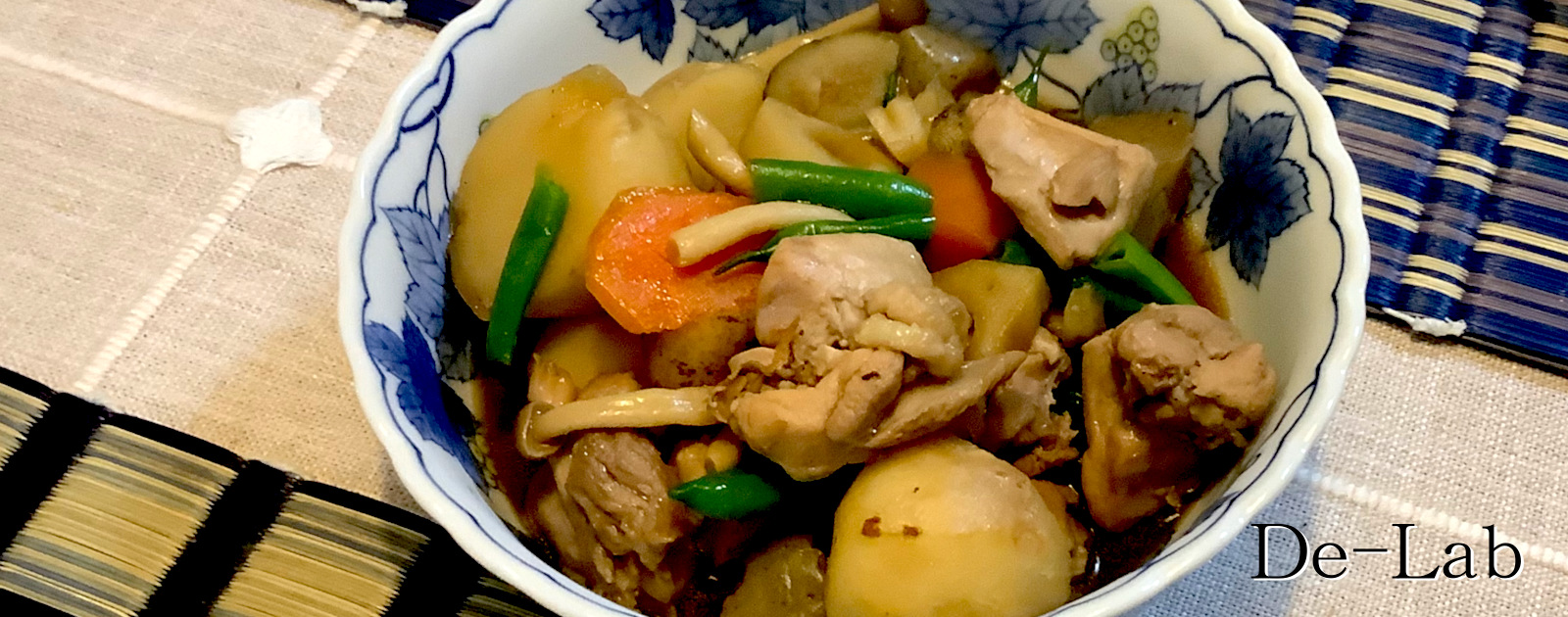
鶏もも肉と里芋、れんこん、ごぼう、にんじん、こんにゃく、しいたけを炒めてから甘辛く煮含める、福岡生まれの郷土料理。
先に具材を油で炒めることで煮崩れしにくくなり、コクのある味わいに仕上がります。
しいたけの戻し汁を使わなくても、生しいたけと鶏肉の旨味で十分おいしく作れます。
ねっとりとした里芋に煮汁がしみ込み、ご飯がよく進むほっとする一品です。
ごぼうとれんこんは秋から冬が旬の根菜で、食物繊維が豊富。腸内環境を整えるのに役立ちます。
里芋は芋類の中ではカロリーが低めで、カリウムも多く含まれています。
にんじんのβカロテンは油と一緒に摂ると吸収がよくなるので、炒めてから煮る筑前煮は理にかなった調理法です。
たくさんの食材から栄養をまとめて摂れる、寒い季節にうれしいおかずです。
A regional dish from Fukuoka in which chicken thigh, taro, lotus root, burdock, carrot, konjac, and shiitake are stir-fried and then simmered in a sweet-savory sauce.
Stir-frying everything first helps the ingredients hold their shape and adds richness.
Fresh shiitake and chicken provide plenty of savory depth, even without the soaking liquid from dried mushrooms.
With broth soaked into the creamy taro, it’s a comforting dish that goes wonderfully with rice.
Burdock and lotus root are in season from autumn to winter and are rich in dietary fiber, supporting a healthy gut.
Taro is relatively low in calories for a root vegetable and contains plenty of potassium.
The beta-carotene in carrots is absorbed better with oil, so stir-frying before simmering makes good nutritional sense.
It delivers nutrients from many ingredients at once — a welcome dish for the cold season.
【材料】(2〜3人分)
鶏もも肉 1枚(約300g)
里芋 4〜5個(約250g)
れんこん 1/2節(約100g)
ごぼう 1/2本(約80g)
にんじん 1/2本
こんにゃく 1/2枚
しいたけ 4枚
絹さや 6枚(あれば)
ごま油 大さじ1
【煮汁】
だし汁 300ml
酒 大さじ2
砂糖 大さじ1と1/2
みりん 大さじ2
醤油 大さじ3
【作り方】
[里芋の下準備]
里芋はたわしでよく洗って泥を落とし、水気を拭き取る。
耐熱皿に並べてふんわりラップをかけ、
600Wの電子レンジで3〜4分加熱する。
粗熱が取れたら手で皮をむき、大きいものは半分に切る。
※完全にやわらかくせず、少し固さが残るくらいで大丈夫です。
[ほかの具材を切る]
鶏もも肉は余分な脂を取り除き、一口大に切る。
ごぼうはたわしでこすり洗いし、乱切りにする。
れんこんは皮をむき、1cm厚さのいちょう切りにする。
ごぼうとれんこんは水に3分ほどさらし、水気を切る。
にんじんは乱切りにする。
しいたけは軸を取って半分に切る。
こんにゃくはスプーンで一口大にちぎり、
熱湯で2〜3分ゆでてザルに上げる。
※ちぎると断面がでこぼこになり、味がしみ込みやすくなります。
絹さやは筋を取り、塩ゆでして斜め半分に切る。
[炒める]
鍋にごま油を中火で熱し、鶏肉を皮目を下にして入れる。
焼き色がついたら裏返し、表面の色が変わったら一度取り出す。
同じ鍋にごぼう・れんこん・にんじん・こんにゃくを入れ、
油がまわるまで3分ほど炒める。
里芋・しいたけを加えてさっと炒め合わせる。
[煮る]
鶏肉を戻し入れ、だし汁を加えて煮立たせ、アクを取る。
酒・砂糖・みりんを加えて、落としぶたをし、
弱めの中火で5分煮る。
醤油を加えて、さらに10〜12分煮る。
※ときどき鍋をゆすって、煮汁を全体に回してください。里芋が崩れやすいので、大きくかき混ぜないようにします。
落としぶたを取り、中火にして鍋をゆすりながら、
煮汁が少なくなるまで照りよく煮詰める。
器に盛り、絹さやを散らして完成。
※具材を油で炒めてから煮ると、煮崩れしにくく、コクのある仕上がりになります。
※砂糖と酒を先に入れて、醤油はあとから加えると、具材に甘みがしみ込みやすく、やわらかく仕上がります。
※こんにゃくはゆでて臭みを取ってから使ってください。
※里芋は先に電子レンジで加熱すると、皮がむきやすく、ぬめりも抑えられて扱いやすくなります。
※冷める間に味がしみ込むので、少し時間を置くとさらにおいしくなります。冷蔵で3日ほど保存でき、作り置きにも向いています。
※お好みで七味唐辛子を振ると、味が引き締まります。
Ingredients (serves 2–3)
1 chicken thigh (about 300g)
4–5 taro roots (about 250g)
1/2 lotus root (about 100g)
1/2 burdock root (about 80g)
1/2 carrot
1/2 block konjac
4 shiitake mushrooms
6 snow peas (if available)
1 tbsp sesame oil
Simmering Sauce
300ml dashi stock
2 tbsp sake
1 1/2 tbsp sugar
2 tbsp mirin
3 tbsp soy sauce
Instructions
[Prepare the taro]
Scrub the taro well with a brush to remove dirt, then pat dry.
Arrange on a heatproof plate, cover loosely with plastic wrap,
and microwave at 600W for 3–4 minutes.
Once cool enough to handle, peel by hand and halve any large pieces.
※ They don’t need to be fully soft; a little firmness is fine.
[Cut the other ingredients]
Trim any excess fat from the chicken and cut into bite-sized pieces.
Scrub the burdock with a brush and cut into rough chunks.
Peel the lotus root and cut into 1cm-thick quarter rounds.
Soak the burdock and lotus root in water for about 3 minutes, then drain.
Cut the carrot into rough chunks.
Remove the shiitake stems and halve the caps.
Tear the konjac into bite-sized pieces with a spoon,
boil for 2–3 minutes, and drain in a colander.
※ Torn surfaces are rough and absorb flavor better.
De-string the snow peas, blanch in salted water, and halve diagonally.
[Stir-fry]
Heat the sesame oil in a pot over medium heat and add the chicken skin-side down.
Once browned, turn it over; when the surface changes color, remove from the pot.
In the same pot, stir-fry the burdock, lotus root, carrot, and konjac
for about 3 minutes until coated in oil.
Add the taro and shiitake and toss briefly.
[Simmer]
Return the chicken to the pot, add the dashi, bring to a boil, and skim off any foam.
Add the sake, sugar, and mirin, cover with a drop lid,
and simmer over medium-low heat for 5 minutes.
Add the soy sauce and simmer for another 10–12 minutes.
※ Shake the pot occasionally so the sauce coats everything. Taro breaks apart easily, so avoid stirring vigorously.
Remove the drop lid, raise to medium heat, and shake the pot
as the sauce reduces to a glossy glaze.
Plate and scatter the snow peas on top.
※ Stir-frying before simmering helps the ingredients hold their shape and adds richness.
※ Adding the sugar and sake before the soy sauce lets the sweetness soak in and keeps everything tender.
※ Boil the konjac first to remove its odor.
※ Microwaving the taro first makes it easier to peel and less slippery to handle.
※ The flavors soak in as it cools, so it tastes even better after resting. It keeps for about 3 days in the refrigerator and is great for making ahead.
※ A sprinkle of shichimi chili pepper adds a nice accent, if you like.
コメント