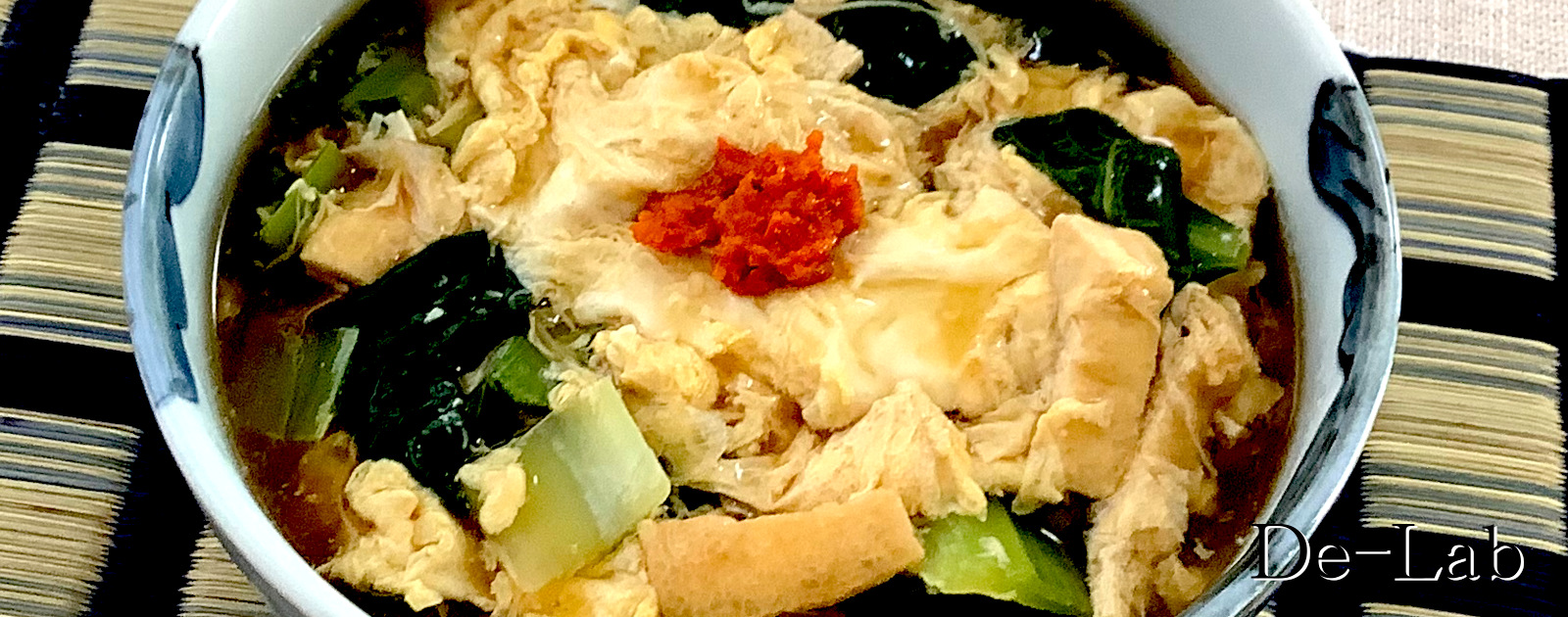
だしの効いたつゆに小松菜と油揚げを入れ、ふんわりとした卵でとじたやさしい味わいのうどん。
油揚げがつゆを吸ってじゅわっと甘く、小松菜のシャキシャキ感とふわふわ卵がよく合います。
冷凍うどんを使えば10分ほどで完成するので、忙しい日のお昼にもぴったりです。
小松菜はカルシウムが豊富で、ほうれん草よりも多く含まれています。アクが少ないので、下ゆでせずにそのまま使えるのもうれしいポイントです。
βカロテンやビタミンCも多く、寒くなってきた季節の体調管理に役立ちます。
卵と油揚げでたんぱく質もしっかり摂れ、体の芯から温まる一杯です。
A gentle bowl of udon in a savory dashi broth with komatsuna and fried tofu, bound with softly set egg.
The fried tofu soaks up the broth for a juicy sweetness, pairing beautifully with the crisp komatsuna and fluffy egg.
With frozen udon it’s ready in about 10 minutes, perfect for a busy weekday lunch.
Komatsuna is rich in calcium — even more than spinach — and has little bitterness, so it can go straight into the pot without blanching.
It’s also high in beta-carotene and vitamin C, helping you stay well as the weather turns cold.
With protein from the eggs and fried tofu, it’s a bowl that warms you to the core.
【材料】(2人分)
冷凍うどん 2玉
小松菜 1/2袋(約100g)
油揚げ 1枚
卵 2個
長ねぎ 少々(あれば)
【つゆ】
だし汁 600ml
醤油 大さじ2
みりん 大さじ2
塩 小さじ1/3
【とろみ付け(お好みで)】
片栗粉 小さじ2(水小さじ4で溶いておく)
【薬味(お好みで)】
七味唐辛子 適量
おろししょうが 適量
【作り方】
小松菜は根元を切り落とし、4cm長さに切る。
茎と葉に分けておく。
油揚げはキッチンペーパーで挟んで軽く押さえ、余分な油を取る。
縦半分に切ってから1cm幅に切る。
長ねぎは斜め薄切りにする。
卵はボウルに割り入れ、白身を切るように軽く溶きほぐす。
※混ぜすぎないほうが、ふんわりした卵とじになります。
鍋にだし汁を入れて中火にかけ、煮立ったら
醤油・みりん・塩を加える。
油揚げと小松菜の茎を入れて2分ほど煮る。
小松菜の葉と長ねぎを加えて、さっと煮る。
とろみをつける場合は、ここで火を弱め、
水溶き片栗粉を回し入れて混ぜ、ひと煮立ちさせる。
※とろみをつけると卵がふんわり広がり、つゆも冷めにくくなります。
つゆが煮立っているところに、溶き卵を細く回し入れる。
すぐには混ぜず、卵がふわっと浮いてきたら火を止める。
冷凍うどんは袋の表示通りに電子レンジで加熱するか、
熱湯でゆでて湯を切る。
器にうどんを入れ、卵とじのつゆを具ごとたっぷりかける。
お好みで七味唐辛子やおろししょうがを添えて完成。
※小松菜は茎と葉で火の通り方が違うので、茎を先、葉をあとに入れると、どちらもちょうどよい食感になります。
※油揚げの油を軽く取っておくと、つゆが油っぽくならず、味もしみ込みやすくなります。
※卵はつゆがしっかり煮立っているところに入れるのがポイント。ぬるいと卵がつゆに溶けて濁ってしまいます。
※卵を入れたらすぐにかき混ぜず、少し待つとふんわり仕上がります。
※七味唐辛子を振るとピリッと、おろししょうがを加えると体がぽかぽか温まります。
Ingredients (serves 2)
2 portions frozen udon noodles
1/2 bag komatsuna (about 100g)
1 sheet aburaage (fried tofu)
2 eggs
A little long green onion (if available)
Broth
600ml dashi stock
2 tbsp soy sauce
2 tbsp mirin
1/3 tsp salt
To Thicken (optional)
2 tsp cornstarch (dissolved in 4 tsp water)
Condiments (optional)
Shichimi chili pepper (as needed)
Grated ginger (as needed)
Instructions
Trim the komatsuna roots and cut into 4cm lengths.
Separate the stems and leaves.
Press the aburaage between paper towels to remove excess oil.
Cut in half lengthwise, then into 1cm strips.
Thinly slice the green onion diagonally.
Crack the eggs into a bowl and beat lightly, just enough to break up the whites.
※ Under-mixing gives a fluffier result.
Bring the dashi to a simmer in a pot over medium heat,
then add the soy sauce, mirin, and salt.
Add the aburaage and komatsuna stems and simmer for about 2 minutes.
Add the komatsuna leaves and green onion and cook briefly.
To thicken, lower the heat now,
stir in the cornstarch slurry, and bring back to a simmer.
※ Thickening helps the egg spread into soft ribbons and keeps the broth hot longer.
With the broth at a simmer, pour in the beaten egg in a thin stream.
Don’t stir right away; turn off the heat once the egg floats up fluffy.
Microwave the frozen udon according to the package instructions,
or boil it and drain.
Place the udon in bowls and ladle over the egg broth with all the toppings.
Add shichimi chili pepper or grated ginger, if you like.
※ Komatsuna stems and leaves cook at different rates — adding the stems first and the leaves later gives both the right texture.
※ Removing some oil from the aburaage keeps the broth from tasting greasy and helps it absorb flavor.
※ Add the egg while the broth is at a full simmer; if it’s not hot enough, the egg dissolves and clouds the broth.
※ Wait a moment before stirring after adding the egg for a fluffier finish.
※ Shichimi adds a spicy kick, and grated ginger warms you right up.
コメント